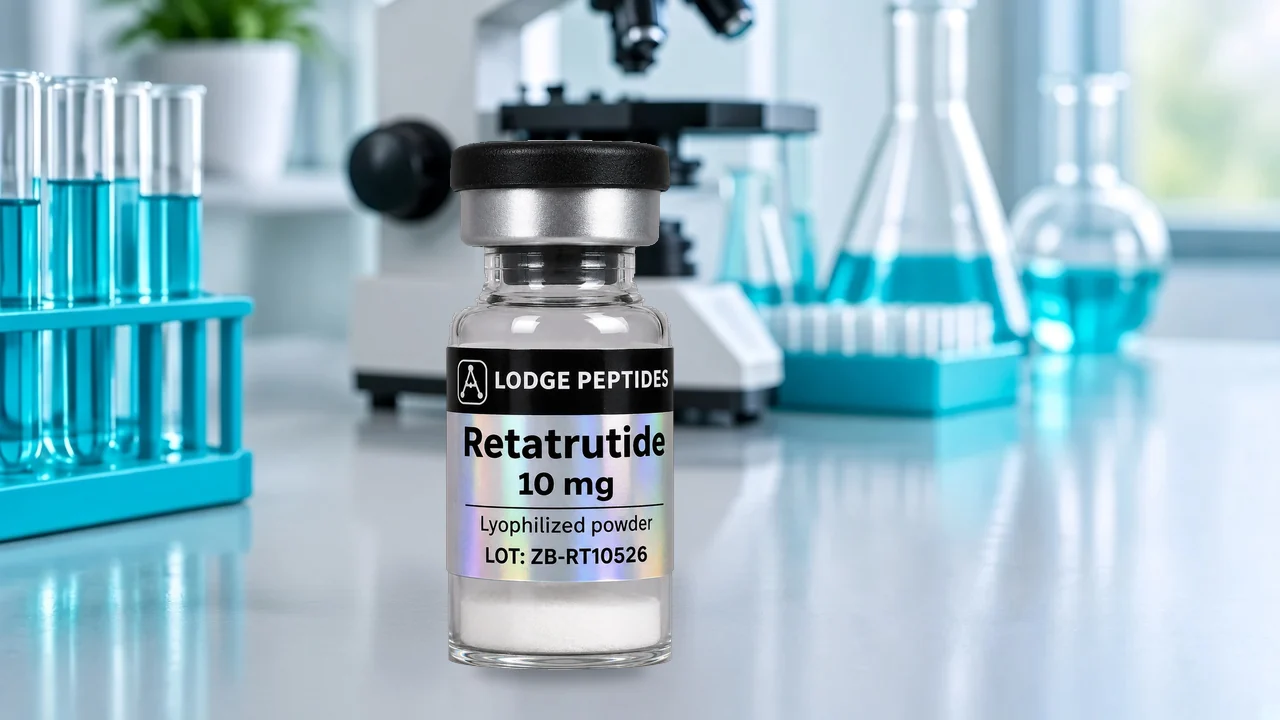
Retatrutide is an investigational peptide that has drawn a great deal of scientific attention. This overview explains what it is, how it is described at the receptor level, where it sits in development and what to check when sourcing it for laboratory research. It is general information, not medical advice.
- RT40 is shorthand for a 40 mg vial of retatrutide. RT10, RT20 and RT30 are the smaller sizes of the same peptide.
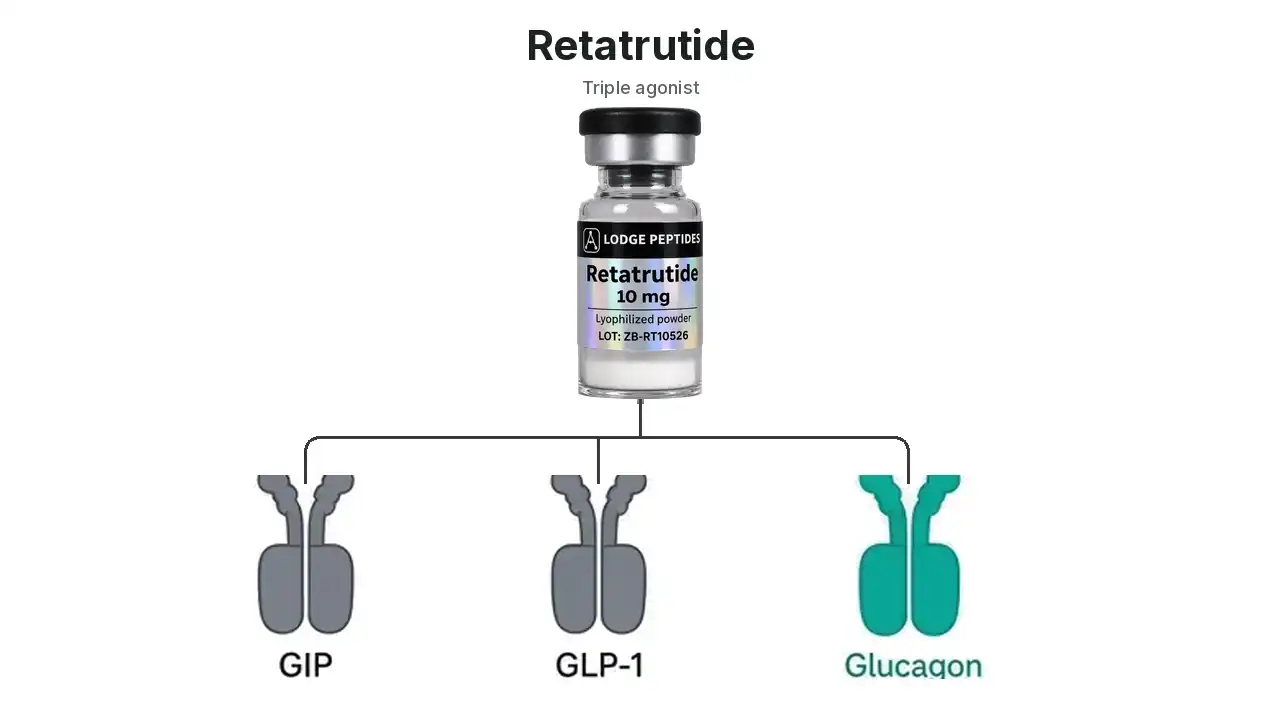
- Retatrutide (code LY3437943) was developed by Eli Lilly and is described as a triple agonist: GIP, GLP-1 and glucagon receptors.
- Because it targets three receptors at once, retatrutide is sometimes informally nicknamed “GLP-3” — a nickname used by some sellers, not an official drug name.
- It is not an approved medication in Canada. Read original papers and trial registries for current findings.
- For laboratory work, batch-specific test results matter more than marketing.
- Lodge Peptides sells it for research use only.
Looking for retatrutide in Canada? Compare all four strengths, the tested lots and price per mg on our retatrutide Canada page.
What is RT40?
RT40 is shorthand for a 40 mg vial of retatrutide. Research suppliers use RT10, RT20, RT30 and RT40 as short product codes for the 10, 20, 30 and 40 mg sizes. RT40 is not a different compound or a new peptide: it is the same retatrutide molecule (development code LY3437943) that Eli Lilly is testing in clinical trials. The only difference between the codes is how much peptide is in the vial.
- What it is studied for: obesity, type 2 diabetes and related metabolic conditions, in Lilly’s phase 3 program (the TRIUMPH trials).
- Is it approved? No. Retatrutide is not approved by Health Canada, the US FDA or any other regulator, so any vial labelled RT40 is research material, not a medicine.
- Is it safe? Safety is still being studied. In trials, the most common side effects were gastrointestinal (nausea, diarrhea, vomiting, constipation). Research-grade vials are not made under drug manufacturing rules, and quality varies widely between sellers, which is why the lab report for the exact lot matters.
- How to compare prices: compare the price per milligram actually measured, not per vial. Our strengths comparison works this out for every size.
Our RT40 (retatrutide 40 mg) lot is in for third-party testing. Its results will be posted on the product page and in the COA library when they are ready.
What it is
Retatrutide is a synthetic peptide developed by Eli Lilly under the development code LY3437943. It is described as a triple agonist, meaning a single molecule activates three receptors involved in metabolic signalling: the GIP receptor, the GLP-1 receptor and the glucagon receptor.
Why three receptors?
GLP-1 and GIP are incretin hormones, and their receptors are linked in the literature to appetite and glucose regulation. Glucagon receptor activity is linked to energy expenditure. Studying all three together is what separates retatrutide from earlier single or dual agonists, and it is why researchers compare the compounds side by side.
Where the research stands
Retatrutide has moved from early studies into a phase 3 program, and results are still being reported. For current findings, read the original papers and the registry entries instead of relying on summaries. It is not an approved medication in Canada.
What to check on a COA
A research compound is only as useful as its documentation. A good batch report names the lab, shows the method, and carries a lot number that matches your vial. Our guide to reading a peptide COA explains each section, and the COA library lists the third-party reports for every tested Lodge Peptides batch.
Handling and storage
Lyophilized retatrutide is handled like other freeze-dried peptides. For reconstitution maths see the calculator, read how to reconstitute lyophilized peptides, and for storage see how to store lyophilized peptides.
Our lots and what they tested at
We carry retatrutide in 10, 20, 30 and 40 mg strengths, and each tested lot has its own third-party report (the 40 mg lot is in for testing). Purity across the three tested lots ranged from 99.5% to 99.7%. Measured content ranged from 93.1% of label on the 10 mg lot to 123.3% on the 20 mg lot, which is a good illustration of why content matters as much as purity. The full lot-by-lot table, with price per measured milligram, is in retatrutide strengths compared.
Muscle and lean mass: how much of the weight lost in these trials was lean mass, and what preserves it, is covered in do retatrutide and tirzepatide cause muscle loss?
More on tirzepatide: its mechanism, the SURMOUNT and SURPASS results and what to check on a lab report are covered in tirzepatide: a research overview.
Switching from tirzepatide or semaglutide: why the literature does not offer a 1:1 conversion is covered in switching from tirzepatide or semaglutide to retatrutide.
Frequently asked questions
What is RT40 peptide?
RT40 is shorthand for a 40 mg vial of retatrutide, the triple GIP, GLP-1 and glucagon receptor agonist developed by Eli Lilly. RT10, RT20 and RT30 are the 10, 20 and 30 mg sizes of the same peptide.
Is reta the same as retatrutide?
Yes. Reta is a common nickname for retatrutide, and RT10 to RT40 are product codes for different vial sizes of it.
Is retatrutide approved in Canada?
No. It is an investigational compound and is not an approved medication in Canada. Check Health Canada and the sponsor for current status.
What does triple agonist mean?
It means one molecule activates three different receptors: GIP, GLP-1 and glucagon. Because it acts on three targets, retatrutide is sometimes informally nicknamed “GLP-3”, though that is not an official name. Research compares this with earlier compounds that act on one or two.
What should I look for in a retatrutide COA?
Batch-specific purity and identity data, the measured content, and a lot number that matches your vial. Our guide to reading a COA explains each section.
How should lyophilized retatrutide be stored?
Sealed vials are generally kept refrigerated or frozen, away from light and moisture. Follow the supplier’s instructions and see our storage guide.
Is it sold for human use?
No. Retatrutide sold by Lodge Peptides is for laboratory research use only and is not for human or animal consumption.
Comparing compounds? See retatrutide vs tirzepatide for trial results side by side.
Sources and further reading
- Where to buy retatrutide in Canada
- How to mix and store retatrutide
- ClinicalTrials.gov: retatrutide studies
- New England Journal of Medicine: phase 2 report (2023)
- HCPLive: phase 3 trial news (July 2026)
Products sold by Lodge Peptides are intended for laboratory research use only and are not for human or animal consumption. This article is general educational information, not medical or legal advice.
Email list
Get lot reports and guides in your inbox
New lot reports, research guides, restocks, and occasional offers from the Lodge Peptides team.