Pre-loaded peptide pens are showing up everywhere in Canada right now, often sold with big claims about shelf life. Pens really are convenient. But a pen is just a container: what matters is what went into it, when it was mixed and whether you can check either one. This guide compares pre-filled pens, reusable pens you fill yourself, and plain vials, so you can choose with the facts in front of you.
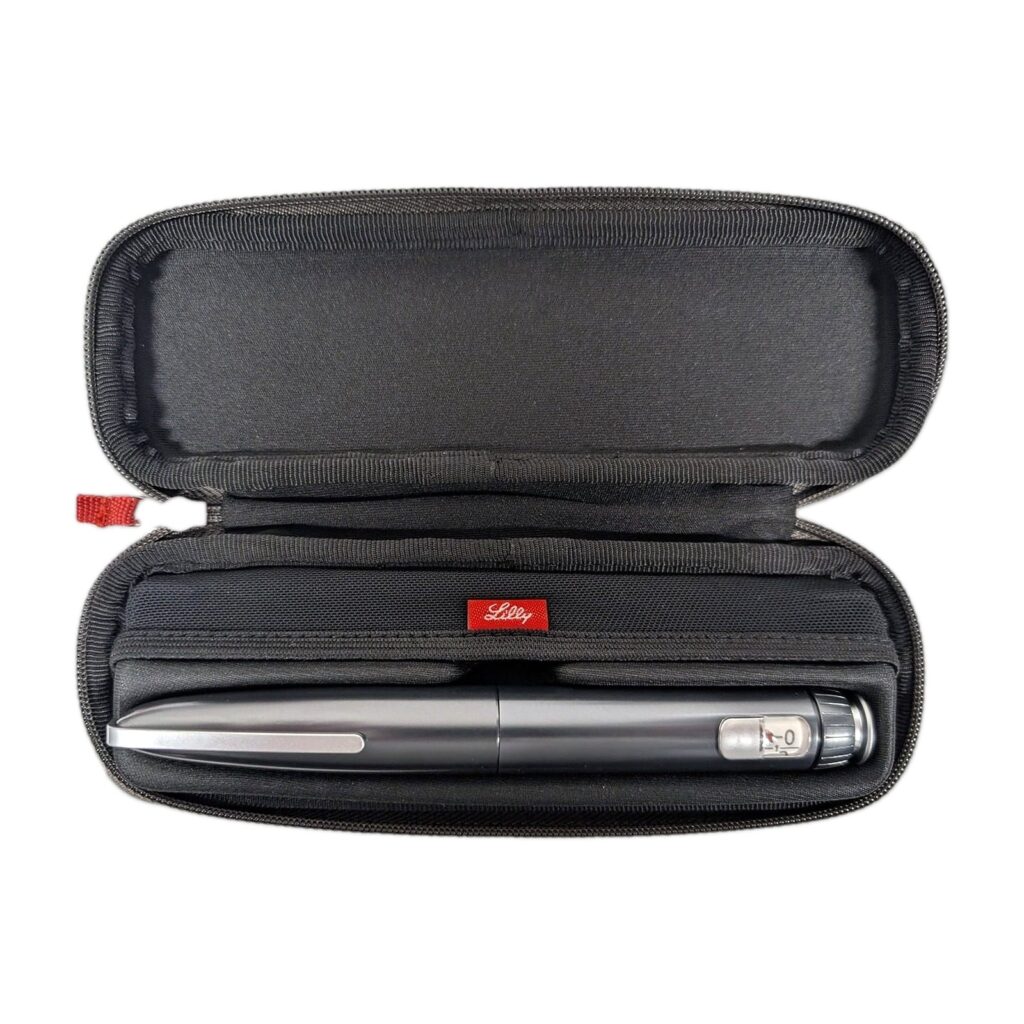
- A pre-loaded pen holds peptide that has already been dissolved. Once a peptide is in solution, its shelf life is the same whether it sits in a pen cartridge or a vial.
- Lyophilized (freeze-dried) powder is the most stable form a peptide can take. That is why vials are shipped and stored dry.
- Claims like “six months in a pen” should come with stability data for that solution. Without it, treat the solution like any other reconstituted peptide.
- A reusable pen filled from a vial you can verify gives you the convenience of a pen with a lab report you can actually match to your lot.
- Pen units work like syringe units: on a U-100 pen, 1 unit is 0.01 mL, so our peptide calculator works for pens too.
What a pre-loaded pen actually is
A pre-loaded (or pre-filled) peptide pen is a pen injector with a cartridge that already contains a peptide solution. Someone took lyophilized powder, dissolved it in a diluent such as bacteriostatic water, and filled the cartridge. The pen itself is the same idea as an insulin pen: you dial a number of units and the pen pushes out that volume.
Some are disposable pens that are thrown away when empty. Others are reusable pens sold with a pre-filled cartridge. Either way, the peptide inside is no longer a dry powder. It is a solution, and the clock started the moment it was mixed.
Shelf life: powder vs solution
Peptides break down mainly through reactions that need water, such as hydrolysis and deamidation, plus oxidation and microbial growth. Freeze-drying removes the water, which is why a sealed lyophilized vial stored cold, dry and dark keeps far longer than the same peptide in solution. Our peptide storage guide covers this in detail.
Moving a solution into a pen cartridge does not change that chemistry. The cartridge is glass with a rubber plunger and septum, much like a vial. A pen does not freeze-dry anything, so it cannot make a dissolved peptide last like a powder.
For punctured multi-dose containers, a widely used convention is to discard them 28 days after first use unless the manufacturer specifies something different. Some peptides in solution may hold up longer than that and some less, but the only way to know is stability testing of that specific solution over time. If a seller says their pens last six months, the fair question is: where is the stability data, and what was the purity at month six?
What you cannot check on a pre-filled pen
A certificate of analysis (COA) for a vial tests the lyophilized powder from a specific lot. With a pre-filled pen, several things happen after that test that you cannot see:
- The actual concentration. You have to trust that a stated amount went into a stated volume. A pen labelled 10 mg could hold any amount, and you would have no way to tell.
- The mixing conditions. Was it filled in a clean environment with sterile technique and a preserved diluent, or on a kitchen counter?
- The fill date. A pen mixed months ago and stored warm in a warehouse looks identical to one filled yesterday.
- The link to a lab report. Even if a COA exists, there is usually nothing tying that report to the solution in your pen.
With a vial, you can match the lot number on the label to its third-party lab report, and you control when and how it is reconstituted.
Why pens are popular
None of this means pens are a bad idea. They are popular for good reasons:
- Speed. Dial the units and press. No drawing up from a vial each time.
- Precision. Most pens dial in whole-unit steps, which is easier to read than small syringe markings.
- Fewer supplies. One cartridge replaces many separate draws, and pen needles are small and cheap.
- Compact storage. A pen, spare needles and alcohol pads fit in one small case that lives in the fridge.
The problem is not the pen. It is buying a solution you cannot verify, at a higher price, with a shelf-life claim nobody can back up.
The middle ground: a reusable pen you fill yourself
You can get the convenience of a pen and keep the verifiable vial. A reusable pen takes a standard 3 mL cartridge. You reconstitute a vial you can match to its lab report, transfer the solution into an empty sterile cartridge, and load it into the pen.
The Lilly HumaPen Savvio is a reusable U-100 pen made for 3 mL cartridges. It dials from 1 to 60 units per press in 1-unit steps and takes standard BD-style pen needles.
A typical setup looks like this:
- A reusable U-100 pen, such as the HumaPen Savvio
- Empty sterile 3 mL cartridges that fit the pen (check the fit before relying on a new brand)
- Bacteriostatic water and a syringe for the transfer
- Pen needles, used once and replaced each time
- Alcohol prep pads for the vial top and cartridge septum
- A small insulated case that stays in the fridge
Some practical points. Label each cartridge with what is in it, the concentration and the date it was mixed. Keep it refrigerated at 2 to 8 °C and never freeze it. Pens are normally primed with a small amount before each use to clear air, so a little solution goes to priming. And a pen or cartridge is for one person only: never share one, even with a new needle.
Thinking of putting two peptides in one cartridge? A cartridge holds the mixture for weeks, so compatibility matters. See mixing peptides in one solution first.
Pen math: concentration and units
A U-100 pen works on the same scale as a U-100 insulin syringe: 1 unit is 0.01 mL, and a full 3 mL cartridge is 300 units. So the math is the same as for a vial:
- Concentration = mg of peptide ÷ mL of diluent.
- Units for 1 mg = 100 ÷ concentration.
Example: a 10 mg vial dissolved in 3 mL fills a cartridge at 3.33 mg/mL, so 1 mg is 30 units. The same 10 mg in 2 mL is 5 mg/mL, so 1 mg is 20 units. Using more diluent gives finer control per unit; using less keeps volumes smaller. Run any combination through our peptide calculator, and see peptide concentration math for the lab for worked examples.
Side-by-side comparison
| Pre-filled pen | Reusable pen, filled from a vial | Vial and syringe | |
|---|---|---|---|
| Form when shipped | Solution | Dry powder | Dry powder |
| Shelf life before use | Starts at mixing, often unknown | Long while dry; starts when you mix | Long while dry; starts when you mix |
| Lab report matches what you use | Rarely | Yes, by lot number | Yes, by lot number |
| You know the concentration | Only the seller’s word | Yes | Yes |
| Convenience | High | High after setup | Lower |
| Running cost | Highest per mg | Pen is a one-time cost | Lowest upfront |
Frequently asked questions
Do pre-loaded peptide pens really last six months?
Not by default. Once a peptide is dissolved, its stability depends on the peptide, the diluent and storage, not on whether it sits in a pen or a vial. A six-month claim needs stability data for that specific solution. Without it, a common convention for multi-dose containers is to discard them 28 days after first use.
Are peptide pens better than vials?
Pens are more convenient, not more stable. The best of both is usually a reusable pen filled from a lyophilized vial you can match to its lab report, so you get pen convenience with known purity and a known mixing date.
How many units are in a 3 mL pen cartridge?
300 units on a U-100 pen, because 1 unit is 0.01 mL. How many mg each unit holds depends on how much diluent you used.
Does the peptide calculator work for pens?
Yes. U-100 pen units and U-100 syringe units are the same volume, so the units from our calculator are the units you dial on the pen.
Can a reusable insulin pen be used with other cartridges?
A reusable pen measures volume mechanically, so it dispenses the same volume per unit whatever is in the cartridge. The cartridge must physically fit the pen. Check the fit and that the plunger moves smoothly before relying on a new cartridge brand.
Can I share a pen if I change the needle?
No. Pens and cartridges are single-person devices. Solution can flow back into the cartridge, so changing the needle does not make sharing safe.
Sources and further reading
- HumaPen Savvio product information (cartridge size, 1 to 60 units in 1-unit steps)
- Lilly Medical: needles recommended for the HumaPen Savvio
- Joint Commission requirements for multi-dose vials (Becker’s ASC)
- How to store lyophilized peptides
- How to reconstitute lyophilized peptides
Products sold by Lodge Peptides are intended for laboratory research use only and are not for human or animal consumption. This article is general educational information, not medical or legal advice.
Email list
Get lot reports and guides in your inbox
New lot reports, research guides, restocks, and occasional offers from the Lodge Peptides team.