“KPV Canada” is a common search, and the results are a mix of regulator warnings and shop pages. This page sets out where KPV actually stands in Canada, what the published research shows, and what to check before buying from any vendor.
This is a plain-language summary of public documents, not legal or medical advice.
- KPV is not an approved drug in Canada. There is no DIN in Health Canada’s Drug Product Database, so it cannot be lawfully sold for human use.
- Health Canada’s April 2026 advisory on unauthorized injectable peptides named KPV among seized products and said “research use only” labelling does not make a product legal.
- KPV is a research compound with no approved human use; check sport anti-doping rules separately.
- What the published research shows, in brief: KPV is the C-terminal tripeptide of alpha-MSH; in mouse models of colitis it reduced inflammation, and it is taken up by intestinal cells via the PepT1 transporter (Kannengiesser et al., 2008; Dalmasso et al., 2008).
- If a vendor sells it, verify the lot: match the lot number, open the lab’s verification page, and check identity, purity and content.
Looking for KPV in Canada? The price, current lot and lab report are on our KPV 10mg page.
Canadian status
In Canada, injectable peptides are generally regulated as prescription drugs, and a drug sold for human use needs Health Canada authorization, shown by an 8-digit Drug Identification Number (DIN). KPV has no DIN in Health Canada’s Drug Product Database, so it is not an approved drug and cannot be lawfully sold for human use. Health Canada’s 2026 advisories on unauthorized peptides have named KPV among products it seized, and state that a “research use only” label does not make a product legal or exempt it from the rules; Health Canada is also working with the CBSA to stop shipments at the border.
What the research shows
KPV (lysine-proline-valine) is the C-terminal tripeptide of alpha-melanocyte-stimulating hormone (α-MSH), molecular formula C16H30N4O4, about 342.4 g/mol (PubChem; matching Lodge Peptides’s lab report). Its research is anti-inflammatory. In two mouse models of inflammatory bowel disease, KPV reduced inflammation, led to earlier recovery and lower myeloperoxidase activity, and worked even in mice lacking a functional melanocortin-1 receptor, suggesting an MC1R-independent action (Kannengiesser et al., 2008). A separate study showed the intestinal peptide transporter PepT1 carries KPV into colonic cells, where it reduced inflammation (Dalmasso et al., 2008). The evidence is preclinical.
KPV is also the only current Lodge Peptides product with a published endotoxin report, which fits its inflammation research use. See the KPV research overview and endotoxin testing explained.
What to check before buying
- Match the lot number on the vial to the lot on the report.
- Open the lab’s own verification page with the report code (not a screenshot or a PDF someone emails you).
- Check identity by mass spectrometry, purity by HPLC and measured content in mg against the label.
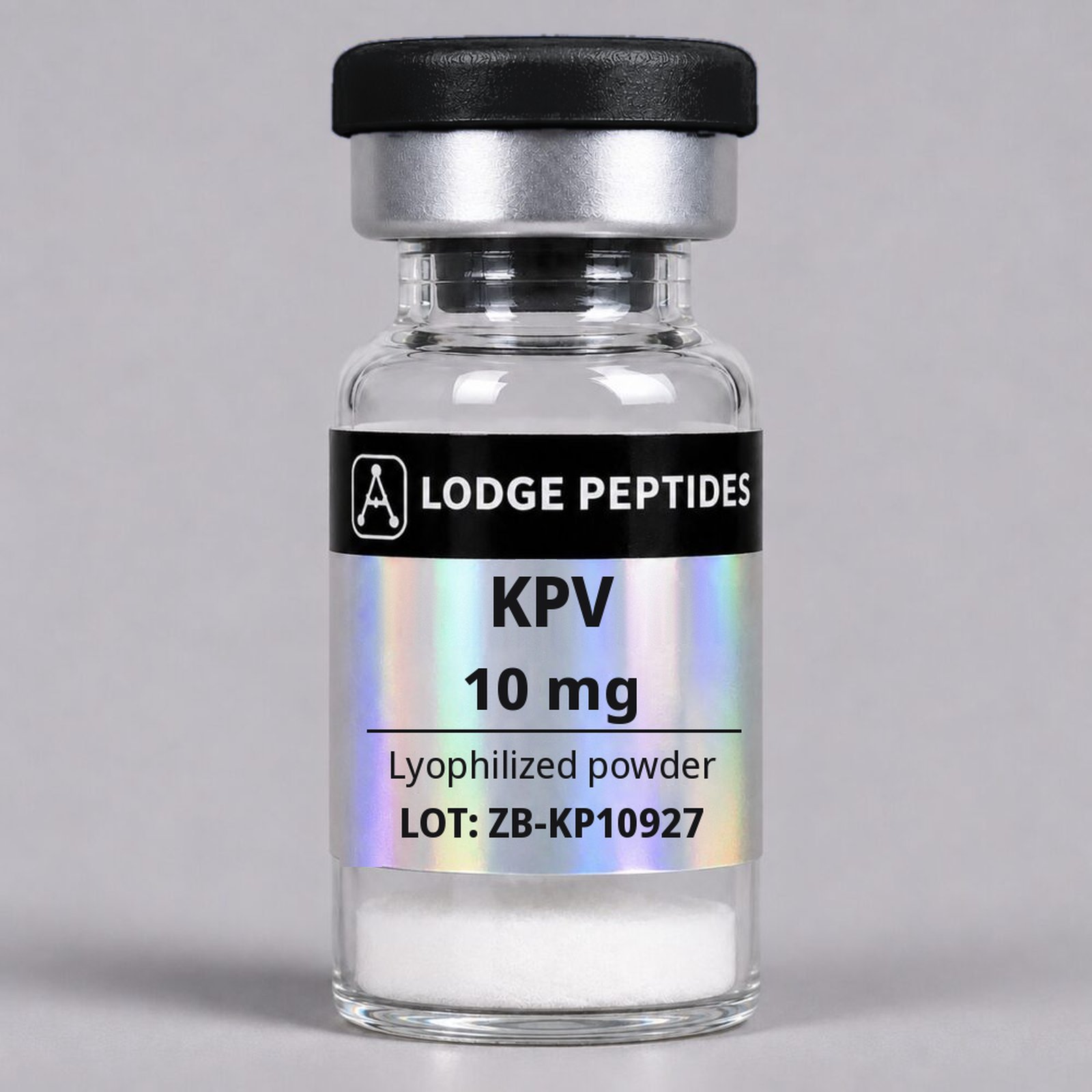
- For KPV, the report should confirm the tripeptide mass; Lodge Peptides’s lot ZB-KP10927 measured 12.67 mg at 99.9% and tested below the endotoxin limit of quantitation (<12.5 EU per vial).
Lodge Peptides and KPV
Lodge Peptides sells KPV 10 mg, and KPV is also part of the KLOW80 blend, for laboratory research only.
Frequently asked questions
Is KPV legal in Canada?
KPV is not an approved drug in Canada (no DIN), so it cannot be lawfully sold for human use. Health Canada has named it among seized unauthorized peptides, and says “research use only” labelling does not make a product legal.
Is KPV approved by Health Canada?
No. There is no product with this active ingredient approved for this use in Health Canada’s Drug Product Database.
What does the research on KPV show?
In mouse colitis models KPV reduced inflammation and is taken up by intestinal cells via PepT1 (Kannengiesser 2008; Dalmasso 2008).
What should I check before buying KPV?
Match the lot number on the vial to the report, open the lab’s verification page with the report code, and confirm identity by mass spectrometry, purity by HPLC and measured content against the label.
Does Lodge Peptides sell KPV for human use?
No. Lodge Peptides sells KPV for laboratory research only, with a Peptide Test Canada report for each tested lot. We do not give dosing advice.
Related guides
- Is retatrutide legal in Canada?
- Peptides and Canadian customs
- KPV research overview
- Peptide endotoxin testing
- KPV 10 mg
Sources
- Health Canada. Think twice before injecting peptides bought online: unauthorized products can seriously harm you. Advisory RA-81874, 9 April 2026. recalls-rappels.canada.ca
- Health Canada. Drug Product Database, active-ingredient search for KPV (no result), checked 21 November 2026. health-products.canada.ca
- Kannengiesser K, et al. Melanocortin-derived tripeptide KPV has anti-inflammatory potential in murine models of inflammatory bowel disease. Inflamm Bowel Dis. 2008;14(3):324-31. PubMed 18092346
- Dalmasso G, et al. PepT1-mediated tripeptide KPV uptake reduces intestinal inflammation. Gastroenterology. 2008;134(1):166-78. PubMed 18061177
- PubChem. Lys-Pro-Val (KPV), CID 125672. pubchem.ncbi.nlm.nih.gov
Products sold by Lodge Peptides are intended for laboratory research use only and are not for human or animal consumption. This article is for educational purposes and is not medical advice.
Email list
Get lot reports and guides in your inbox
New lot reports, research guides, restocks, and occasional offers from the Lodge Peptides team.